
In the ever-evolving world of search engine optimization (SEO), travel brands face a unique challenge: standing out in a saturated market where thousands of websites compete for attention across destinations, experiences, and travel advice. Traditional travel SEO tactics, keyword targeting, backlinks, and technical optimization are no longer enough on their own. Today, the real differentiator is topical authority.
Topical authority has emerged as a powerful, often underutilized strategy that can dramatically improve search visibility, user trust, and long-term organic growth. For travel businesses, bloggers, and content platforms, it is quickly becoming the secret weapon that separates industry leaders from the rest.
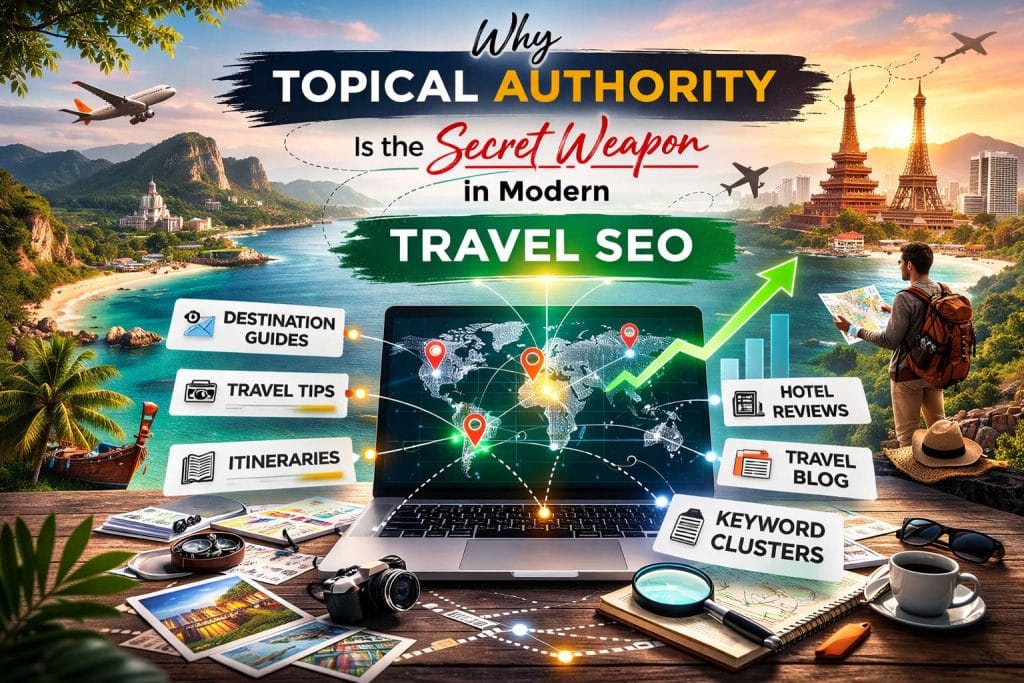
What Is Topical Authority?
Topical authority refers to how comprehensively and credibly a website covers a specific subject area. Instead of focusing on isolated keywords, it emphasizes building a deep, interconnected body of content around a theme.
For example, a travel website that publishes a single article about “Things to Do in Paris” may rank temporarily. However, a site that covers Paris extensively, neighborhood guides, food experiences, transportation tips, itineraries, seasonal advice, and hidden gems, signals to search engines that it is a trusted authority on that destination.
Search engines increasingly prioritize websites that demonstrate expertise, depth, and consistency. This shift is driven by the need to deliver more reliable and helpful results to users.
Why Travel SEO Has Changed
The travel industry is particularly affected by changes in SEO for several reasons:
- High competition: Countless blogs, agencies, and booking platforms target the same keywords.
- User intent complexity: Travelers search for inspiration, planning advice, and booking options at different stages.
- Content saturation: Generic articles no longer stand out.
Search engines now evaluate not just what you say, but how well you cover a topic. Thin content, even if optimized for keywords, struggles to rank against comprehensive resources.
This is where topical authority comes in; it aligns perfectly with modern search algorithms that prioritize quality, relevance, and expertise.
The Core Benefits of Topical Authority in Travel SEO
1. Higher Search Rankings Across Multiple Keywords
When you build topical authority, you naturally rank for a wide range of related keywords, not just your primary target.
For instance, a well-developed content cluster about “Safari in Tanzania” might rank for:
- Best time for safari in Tanzania
- Serengeti travel tips
- Tanzania safari costs
- Wildlife experiences in East Africa
Instead of chasing individual keywords, your site becomes a hub for an entire topic.
2. Improved Internal Linking and Site Structure
Topical authority encourages structured content through clusters and pillars. A pillar page (e.g., “Ultimate Guide to Italy Travel”) links to supporting articles like:
- Rome itinerary
- Venice travel guide
- Italian food experiences
This interconnected structure helps search engines understand your content hierarchy and improves crawlability.
3. Increased User Engagement
Travelers want reliable, detailed information. When they find a site that answers multiple questions in one place, they stay longer, click more pages, and are more likely to return.
Higher engagement signals, such as time on site and lower bounce rates, further boost SEO performance.
4. Stronger Brand Trust and Credibility
A site that consistently publishes high-quality, in-depth travel content builds trust with its audience. Users begin to see it as a go-to resource rather than just another blog.
This trust translates into:
- More repeat visitors
- Higher conversion rates
- Increased word-of-mouth sharing
5. Future-Proofing Against Algorithm Updates
SEO trends change frequently, but the emphasis on expertise and authority is here to stay. Websites that invest in topical authority are less vulnerable to algorithm updates compared to those relying on short-term tactics.
How to Build Topical Authority in Travel SEO
Building topical authority requires a strategic, long-term approach. Here’s how to do it effectively:
1. Choose Clear Content Niches
Instead of trying to cover every destination in the world, focus on specific niches where you can dominate.
Examples:
- Budget travel in Southeast Asia
- Luxury safaris in Africa
- Solo female travel in Europe
Specialization allows you to go deeper and stand out.
2. Create Pillar Content
A pillar page is a comprehensive guide that serves as the foundation of your topic.
For example:
- “Complete Guide to Visiting Zanzibar”
This page should cover all major aspects of the topic and link to more detailed subtopics.
3. Develop Supporting Content Clusters
Around each pillar, create multiple detailed articles that explore subtopics.
For a Zanzibar guide, clusters might include:
- Best beaches in Zanzibar
- Zanzibar itinerary (3, 5, 7 days)
- Local food guide
- Cultural experiences
Each piece should link back to the pillar and to related articles.
4. Focus on Search Intent
Understanding user intent is critical. Travel queries typically fall into categories like:
- Informational (e.g., “What to do in Dar es Salaam”)
- Navigational (e.g., “Serengeti National Park entry fees”)
- Transactional (e.g., “Book safari tour Tanzania”)
Your content should match the intent behind each search.
5. Update and Expand Content Regularly
Travel information changes frequently; prices, regulations, and trends evolve. Regular updates keep your content relevant and signal freshness to search engines.
Additionally, expanding existing articles strengthens your authority over time.
6. Leverage First-Hand Experience
Original insights, personal experiences, and unique perspectives are invaluable in travel SEO.
Instead of repeating generic advice, include:
- Personal stories
- Practical tips
- Local recommendations
This not only improves credibility but also differentiates your content.
Common Mistakes to Avoid
While building topical authority is powerful, many travel websites fall into common traps:
1. Publishing Thin Content
Short, superficial articles that barely scratch the surface of a topic will not establish authority. Depth matters more than volume.
2. Ignoring Content Structure
Without a clear hierarchy and internal linking strategy, even high-quality content can fail to perform.
3. Chasing Trends Without Strategy
Jumping on trending destinations without building a cohesive content ecosystem leads to scattered, ineffective SEO efforts.
4. Over-Reliance on AI-Generated Content
While AI can assist in content creation, relying solely on it without adding human insights can result in generic, low-value content.
The Role of E-E-A-T in Travel SEO
Topical authority is closely tied to E-E-A-T (Experience, Expertise, Authoritativeness, Trustworthiness), a framework used by search engines to evaluate content quality.
Travel content benefits significantly from:
- Experience: First-hand travel insights
- Expertise: Knowledge of destinations
- Authority: Comprehensive coverage
- Trust: Accurate, reliable information
By building topical authority, you naturally strengthen all four elements.
Real-World Example of Topical Authority
Consider two travel websites:
Site A:
Publishes random articles on various destinations with minimal depth.
Site B:
Focuses heavily on East Africa travel, covering safaris, culture, food, and logistics in detail.
Over time, Site B will:
- Rank higher for related keywords
- Attract more targeted traffic
- Build a loyal audience
This demonstrates how topical authority creates a compounding advantage.
Why Topical Authority Is a Long-Term Investment
Unlike quick SEO wins, topical authority takes time to build. However, its benefits compound over months and years.
Once established, it becomes increasingly difficult for competitors to outrank you because:
- Your content ecosystem is extensive
- Your internal linking is strong
- Your credibility is well-established
This creates a sustainable competitive edge.
The Future of Travel SEO
As search engines continue to evolve, the focus will shift even further toward:
- Content quality
- User satisfaction
- Semantic relevance
Voice search, AI-driven search results, and personalized recommendations will all favor websites that demonstrate deep expertise in specific areas.
Topical authority aligns perfectly with these trends, making it a future-proof strategy.
Conclusion
Topical authority is no longer optional; it is essential for success in modern travel SEO. By focusing on depth, structure, and user value, travel websites can achieve higher rankings, stronger engagement, and long-term growth.
Instead of chasing individual keywords, the winning strategy is to own entire topics.
For travel brands and creators willing to invest in this approach, topical authority offers a powerful advantageone that turns content into a lasting asset rather than a temporary tactic.
Add your first comment to this post