
The travel industry has always operated on two parallel tracks: the consumer-facing B2C world that most travelers see, and the behind-the-scenes B2B ecosystem that powers it. B2B travel companies, wholesalers, consolidators, destination management companies (DMCs), hotel bed banks, and specialized tour operators; create the inventory, packages, and pricing structures that retail travel agents sell to their clients. In 2025–2026, this sector is booming. Global B2B travel market value sits at approximately $31.73 billion and is projected to reach $78.30 billion by 2030, with a CAGR of 13.27%. Emerging destinations like Tanzania are particularly hot, as international agents seek authentic safari, beach, and adventure experiences they cannot easily source themselves.
For travel agents, understanding this world is no longer optional; it is essential for survival and profitability. Commission rates on B2B products often range from 12–20% (sometimes higher with overrides), far exceeding many B2C margins. More importantly, strong B2B partnerships deliver exclusive inventory, marketing collateral, real-time booking tools, and risk mitigation during peak seasons or disruptions. Yet many agents still treat B2B suppliers as mere “booking engines” rather than strategic allies. This article pulls back the curtain on how the B2B travel world actually works, what agents must evaluate, emerging trends, and, crucially, how digital growth strategies can turn these partnerships into scalable revenue streams. Whether you are an independent agent in Europe or North America sourcing Africa itineraries, or a Tanzanian tour operator looking to attract international partners, the insights below will help you navigate the space effectively.
The B2B Travel Ecosystem Explained
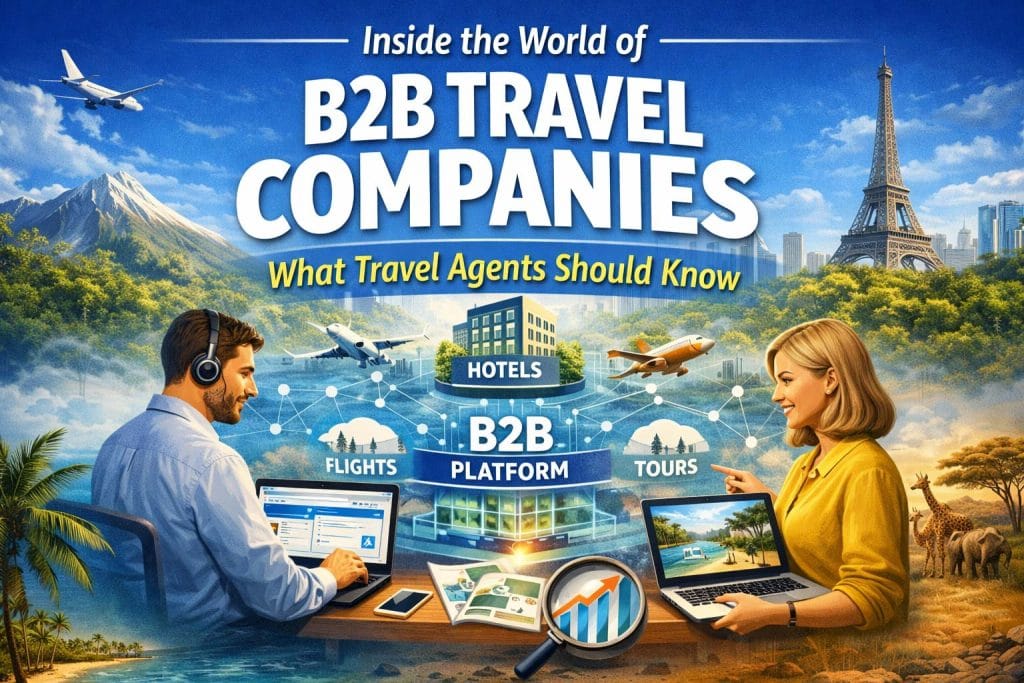
At its core, the B2B travel supply chain is a layered network designed for efficiency and scale. Suppliers (hotels, airlines, ground transportation, activity providers) sell bulk inventory to wholesalers or consolidators at deeply discounted net rates. These wholesalers then package the product, adding mark-ups, commissions, and value, and sell it onward to retail travel agents, who in turn add their own service fee or commission before selling to the end consumer.
Key players include:
- Tour Wholesalers & Operators: Companies that create multi-day packages (e.g., 7-night Serengeti safari + Zanzibar beach extension). They handle contracting, operations, and risk.
- Hotel Consolidators / Bed Banks: Specialists who block large room allocations and resell them to agents at competitive rates.
- Destination Management Companies (DMCs): Local experts in a specific country or region (very prominent in Tanzania). They manage ground logistics, guides, transfers, and customized experiences for international agents.
- Global Distribution Systems (GDS): Amadeus, Sabre, and Travelport provide the technology backbone for real-time availability and booking.
- Specialized B2B Platforms: Modern players offer white-label booking engines, dynamic packaging tools, and API integrations.
In Tanzania, the B2B layer is especially vibrant. International agents rarely have the on-ground knowledge or licenses to operate directly in Arusha, Serengeti, or Zanzibar. Instead, they partner with local DMCs who hold the necessary permits, fleet, and relationships with national parks. This model reduces liability and delivers authentic experiences that clients rave about.
Travel agents who master this ecosystem stop competing purely on price and start offering unique, high-margin itineraries that clients cannot replicate on Booking.com or Expedia.
Benefits Travel Agents Gain from B2B Partnerships
The most obvious advantage is financial. B2B contracts typically unlock net rates 20–40% below rack rates, allowing agents to maintain healthy commissions while still undercutting online prices. Many wholesalers also pay overrides, additional bonuses once an agent hits volume thresholds, creating a true partnership incentive.
Beyond money, B2B companies provide:
- Marketing Support: Professional photography, destination videos, customizable brochures, and co-branded campaigns.
- Product Expertise: Dedicated product managers who train agents on new routes, seasonal wildlife patterns in Tanzania, or cultural nuances in Zanzibar.
- Technology: Real-time APIs, booking portals with instant confirmation, and sometimes white-label websites that agents can brand as their own.
- Risk Sharing: Flexible cancellation policies and operational support during disruptions (critical after the lessons of recent global events).
Agents who build deep relationships with 3–5 reliable B2B partners often see their average booking value rise by 30–50% because they can confidently sell complex multi-destination itineraries.
What to Evaluate Before Signing a B2B Contract
Not all B2B companies are created equal. Smart agents conduct due diligence using a structured checklist:
- Financial Stability & Reputation: Request references from other agents and check payment history. In Tanzania, verify that the DMC holds current TATO (Tanzania Association of Tour Operators) membership and proper insurance.
- Commission Structure & Payment Terms: Understand net vs. gross commissions, override tiers, and payment windows (many pay 30–60 days after travel completion). Look for “net-net” deals that allow agents to set their own markup.
- Contract Flexibility: Minimum volume commitments? Exclusivity clauses? Territory restrictions? The best partners offer rolling contracts with performance reviews rather than rigid lock-ins.
- Technology Integration: Does the supplier offer XML/API connectivity? Real-time availability? Dynamic packaging? In 2026, agents expect seamless integration with their own booking systems.
- Content & Training: High-quality imagery, detailed fact sheets, and regular webinars are non-negotiable. Top B2B partners also host FAM (Familiarization) trips that allow agents to experience the product firsthand.
- Sustainability Credentials: Clients increasingly demand eco-friendly operators. Check for partnerships with Fair Trade Tourism, GSTC certification, or local community projects, especially relevant for Tanzania’s national parks.
Red flags include slow response times, vague contract language, or reluctance to provide client references.
Technology Trends Reshaping B2B Travel
The B2B space is undergoing rapid digital transformation. Gone are the days of faxing availability requests. Modern platforms now feature:
- AI-Powered Dynamic Packaging: Suppliers combine flights, hotels, and activities in real time based on client preferences.
- NDC (New Distribution Capability): Airlines are moving beyond GDS to offer richer content and personalized ancillaries directly to agents.
- White-Label Booking Engines: Agents can embed a supplier’s entire inventory on their own website under their branding.
- CRM & Analytics Tools: Track which destinations convert best and automate follow-up campaigns.
For Tanzanian DMCs and international agents alike, investing in these tools is no longer a luxury. Agents who can offer instant confirmation and personalized proposals close deals faster and reduce back-and-forth emails.
To maximize visibility and attract the right B2B partners, many successful players turn to specialized digital marketing expertise. For example, Max Ayo’s travel advertising agency helps tour operators and travel businesses run targeted Google Ads and Meta campaigns that drive qualified leads and bookings in the competitive Tanzanian market.
2025–2026 Trends Every Agent Must Know
Several macro trends are redefining B2B opportunities:
- Sustainable & Responsible Tourism: Agents who partner with operators demonstrating genuine conservation efforts (anti-poaching initiatives in Serengeti, community-owned lodges) win premium clients willing to pay more.
- Experiential & Multi-Generational Travel: Families and bleisure travelers want customized adventures, hot-air balloon safaris, cultural village visits, or private Zanzibar spice tours. B2B partners who specialize in these deliver higher satisfaction and repeat business.
- AI & Personalization: Suppliers using AI to suggest add-ons based on past behavior give agents a competitive edge.
- Recovery of Long-Haul Markets: Tanzania is seeing strong demand from Europe, North America, and Asia as travelers seek “once-in-a-lifetime” African experiences.
Agents who align their supplier portfolio with these trends position themselves as specialists rather than generalists.
Building Profitable B2B Relationships: Practical Strategies
Success in B2B travel comes down to relationships. Attend industry events like the World Travel Market or ILTM, but also invest in virtual FAMs and regular check-ins with your key suppliers. Share client feedback openly; it helps suppliers improve and strengthens trust.
On the digital front, proactive outreach works wonders. Hotels and DMCs are always looking for new distribution channels. A well-crafted B2B email campaign can open doors that cold calls never will. Max Ayo’s B2B Email Marketing Services specialize in exactly this scenario. Their real-world example of a Zanzibar boutique hotel successfully partnering with international tour operators demonstrates how targeted, value-first outreach generates qualified leads and long-term contracts.
For operators or agents expanding into Tanzania, foundational steps matter. Proper company formation in Tanzania ensures legal compliance and credibility when dealing with international partners. A professional, conversion-focused website is equally critical. Max Ayo’s travel web design company creates custom booking platforms for tour operators and agencies that not only look stunning but drive direct inquiries and seamless reservations.
Search visibility cannot be overlooked either. travel industry seo tailored for travel websites help operators and agents rank for high-intent queries like “Tanzania safari packages for agents” or “Zanzibar DMC partnerships.” Pair this with travel agency google ads services and you create a powerful lead-generation engine that feeds your B2B pipeline continuously.
A Real-World Tanzania Success Story
Consider a mid-sized European travel agency that wanted to expand its Africa portfolio. Instead of randomly contacting DMCs, they first used B2B email strategies to build relationships with three vetted Tanzanian operators. They invested in a co-branded microsite (built via professional travel website design) and ran targeted Google Ads campaigns focused on “luxury Tanzania safaris 2026.” Within six months, the agency added a dedicated Tanzania product line that now accounts for 28% of annual revenue, at commission rates averaging 17%. The local DMCs gained consistent European business without heavy marketing spend. This win-win was made possible by combining strong on-ground partnerships with modern digital tools.
Conclusion: Turn Knowledge into Revenue
The world of B2B travel companies is complex, competitive, and incredibly rewarding for agents who approach it strategically. By understanding the ecosystem, choosing partners carefully, embracing technology, and staying ahead of trends, retail travel agents can transform from order-takers into high-margin specialists.
In dynamic markets like Tanzania, success increasingly depends on both local expertise and global digital reach. Whether you are an international agent seeking reliable African suppliers or a Tanzanian operator ready to scale B2B partnerships, the right support makes all the difference.
Ready to strengthen your position in the B2B travel space? Explore how targeted marketing, professional website development, and strategic outreach can accelerate your growth.
Add your first comment to this post