
Increasing direct bookings is one of the most important goals for hotels looking to grow revenue, strengthen their brand, and build long-term relationships with guests. While online travel agencies (OTAs) such as Booking.com and Expedia help hotels reach international audiences, relying too heavily on third-party platforms can mean paying significant commissions and having less control over the guest relationship.
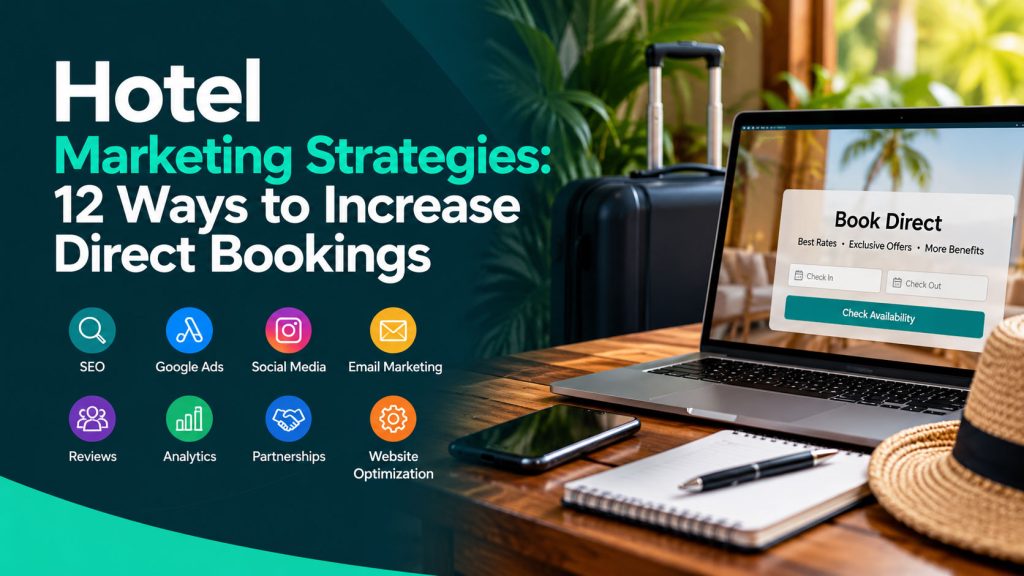
Effective hotel marketing strategies help properties attract potential guests, convert website visitors into paying customers, and encourage previous guests to return. With the right combination of search engine optimization (SEO), paid advertising, social media marketing, website optimization, and guest relationship management, hotels can generate more bookings through their own channels.
For hotels, resorts, and safari lodges in Tanzania and across East Africa, direct booking opportunities can come from international tourists, regional travelers, business visitors, and domestic holidaymakers.
This guide explores 12 practical hotel marketing strategies to increase direct bookings and build a more sustainable hospitality business.
1. Build a Hotel Website Designed to Convert Visitors
Your hotel website is one of your most valuable marketing assets. It allows potential guests to explore your property, compare room options, understand your services, and book directly without relying entirely on an OTA.
However, simply having a website is not enough. It must be designed to turn visitors into customers.
Start by making your website visually appealing, easy to navigate, and optimized for mobile devices. Many travelers research accommodation on their smartphones, so a slow or difficult mobile experience can cost you bookings.
Your website should include:
- High-quality photographs of rooms, facilities, restaurants, and surrounding attractions.
- Clear descriptions of room categories, amenities, and available experiences.
- Transparent pricing and information about taxes, fees, and cancellation policies.
- A visible booking button on important pages.
- Guest reviews and testimonials that build trust.
- Contact details, location information, and answers to common questions.
- A secure booking process with convenient payment options.
Make the booking process as simple as possible. Avoid unnecessary forms, confusing navigation, and unexpected charges that could cause potential guests to abandon their reservations.
For properties serving international visitors, provide accurate information about airport transfers, transport options, nearby attractions, and accepted currencies.
A well-designed hotel website should do more than showcase your property. It should give guests the confidence to book directly.
2. Invest in Hotel Search Engine Optimization (SEO)
Search engine optimization helps your hotel appear in organic search results when travelers look for accommodation. Unlike paid advertising, SEO can continue attracting relevant visitors without requiring payment for every click.
A successful hotel SEO strategy starts with understanding what potential guests search for when planning their trips.
Examples include:
- top hotels in arusha tanzania
- arusha hotels
- Luxury hotels near Kilimanjaro International Airport
- kumbi za harusi dar es salaam
- affordable hotels in dar es salaam
- best hotels in dar es salaam
Create dedicated website pages for your property, room categories, facilities, location, and distinctive experiences. Each page should answer a specific guest need rather than repeating the same general information.
Optimize page titles, meta descriptions, headings, image alt text, and internal links. Publish useful content that helps travelers plan their visits, such as destination guides, local activity recommendations, and seasonal travel advice.
For example, a hotel in Arusha could publish an article about where to stay before or after a Mount Meru trek. That article can link naturally to its accommodation pages and direct booking system.
SEO requires consistency, but it can help hotels attract travelers earlier in their decision-making process and create a long-term source of direct website traffic.
3. Optimize Your Google Business Profile
A Google Business Profile helps travelers discover your property through Google Search and Google Maps. It is especially important for guests searching for hotels in a particular city, neighborhood, or tourist destination.
Complete your profile with accurate business information, including your hotel name, address, telephone number, website, operating hours where applicable, and relevant categories.
Upload current photographs of rooms, dining areas, outdoor spaces, and other facilities. Keep room and property descriptions accurate, and make sure your website link directs visitors to your official booking website whenever possible.
Encourage satisfied guests to leave honest reviews after their stays. Respond professionally to both positive and negative feedback, demonstrating that your hotel values guest experiences.
Monitor the questions guests ask and provide clear answers to recurring concerns.
For hotels in competitive destinations such as Zanzibar, Arusha, and Dar es Salaam, a well-maintained profile can strengthen local visibility and help travelers compare accommodation options.
Your Google Business Profile should work together with your website, not replace it. The goal is to help potential guests discover your hotel and continue to your direct booking channel.
4. Use Google Ads to Reach Travelers With High Booking Intent
Google Ads can help hotels reach potential guests who are actively searching for accommodation. Unlike broad awareness campaigns, search advertising can target people expressing a specific need through their search queries.
For example, a hotel in Zanzibar might target searches such as “Zanzibar beachfront hotel” or “luxury hotel in Stone Town.”
Build campaigns around your property’s locations, facilities, audience segments, and room offerings. Separate high-intent searches from broader research queries so you can measure performance more effectively.
Your campaigns might include:
- Brand campaigns targeting people searching for your hotel’s name.
- Location campaigns targeting accommodation-related searches in your destination.
- Room or experience campaigns promoting specific property features.
- Remarketing campaigns for eligible audiences who previously visited your website.
Send visitors to relevant landing pages rather than directing every advertisement to your homepage. Someone searching for a beachfront resort should arrive on a page that clearly presents your beach accommodation, amenities, photographs, pricing, and booking options.
Track completed reservations and booking revenue where technically possible. Clicks and impressions alone do not establish whether an advertising campaign is profitable.
Calculate your cost per booking and compare it with the contribution earned from those reservations. This helps you determine whether your advertising investment is generating sustainable returns.
5. Develop a Strong Social Media Marketing Strategy
Social media platforms such as Instagram, Facebook, and TikTok allow hotels to showcase their atmosphere, facilities, and guest experiences to potential travelers.
Hospitality is a visual industry. Beautiful rooms, swimming pools, landscapes, food presentations, and memorable guest experiences can inspire people to consider a property for their next trip.
Instead of publishing only promotional offers, develop a balanced content strategy.
Consider sharing:
- Room and property tours.
- Short videos showing the guest experience.
- Restaurant dishes and breakfast presentations.
- Nearby attractions and destination highlights.
- Guest testimonials and approved guest-created content.
- Behind-the-scenes videos featuring your team.
- Seasonal packages and special offers.
Use captions that explain what makes your property distinctive and include a clear next step, such as visiting your website to explore room options.
For hotels targeting international visitors, create content that speaks to the interests of your main source markets. Travelers visiting Tanzania for safaris, for example, may value information about early breakfasts, packed lunches, airport transfers, and proximity to tour departure points.
Social media can create awareness and interest, but its commercial value should be measured through website visits, enquiries, booking referrals, and completed reservations rather than follower growth alone.
6. Run Meta Ads to Generate Direct Bookings
Facebook and Instagram advertising can help hotels reach travelers based on relevant audience characteristics, interests, locations, and campaign signals supported by the platform.
Meta Ads can be particularly useful for promoting seasonal offers, weekend packages, honeymoon experiences, family holidays, and special events.
Begin with a clear campaign objective. If your goal is direct bookings, prioritize a measurable reservation or booking-related conversion where your tracking setup supports it.
Develop several creative variations to test different messages. One advertisement might emphasize the property’s location, another its facilities, and another a limited-period package with clearly stated terms.
Use dedicated landing pages for your offers. Ensure that the advertised package is available, its price is accurate, and the booking process works smoothly on mobile devices.
Retargeting may help you reconnect with eligible previous website visitors who considered your property but did not complete a reservation. Follow the platform’s consent requirements and applicable privacy rules when using audience data.
Monitor cost per booking, booking value, and return on advertising spend. If your campaigns generate enquiries rather than completed reservations, track how many enquiries eventually convert into paying guests.
The objective is not simply to get inexpensive clicks. It is to acquire profitable bookings through your own channels.
7. Make Your Direct Booking Offer More Attractive
Travelers often compare prices across hotel websites and OTAs before deciding where to reserve. If your direct booking experience offers no clear advantage, potential guests may choose a familiar third-party platform.
Develop a compelling direct booking proposition that gives guests a reason to reserve through your website.
Possible benefits include:
- Complimentary breakfast where financially viable.
- Flexible check-in or check-out when availability permits.
- A complimentary airport transfer for qualifying bookings.
- A dining credit or property experience.
- Flexible cancellation terms on selected rates.
- Exclusive packages combining accommodation with local activities.
You do not always need to offer the lowest room rate. Additional value, convenience, transparent policies, and personalized service can also encourage direct reservations.
Before introducing an offer, calculate its cost and expected impact on profitability. A free transfer, for example, may be attractive if its cost is lower than the OTA commission you would otherwise pay, but the calculation depends on the booking’s value and operating expenses.
Clearly display direct booking benefits on your website and booking engine. Explain any restrictions, eligibility conditions, and expiry dates.
A strong offer should improve conversion without unnecessarily reducing your room revenue or creating expectations your hotel cannot consistently meet.
8. Use Email Marketing to Encourage Repeat Bookings
Email marketing allows hotels to maintain relationships with previous guests and potential customers who have consented to receive communications.
It can be more cost-effective to encourage a satisfied guest to return than to acquire every reservation from a new customer. Email also gives your hotel a direct communication channel that does not depend entirely on social media algorithms.
Build your email list through appropriate website sign-up forms, enquiry processes, and guest communication systems. Obtain the necessary consent and provide a clear unsubscribe option for marketing messages.
Segment your audience where useful. Previous leisure guests, corporate travelers, honeymoon couples, and people interested in seasonal packages may respond to different offers.
Useful email campaigns include:
- Welcome emails introducing your property and services.
- Pre-arrival messages with practical information for confirmed guests.
- Post-stay messages requesting feedback.
- Seasonal offers for previous guests.
- Updates about new facilities or experiences.
- Relevant return-visit packages.
For example, a hotel in Arusha could send a relevant offer to previous guests who may be planning another Northern Tanzania safari, provided the communication is appropriate and permission requirements are met.
Measure email engagement alongside website visits, enquiries, and bookings. Avoid sending excessive or irrelevant messages, as these can damage trust and increase unsubscribes.
9. Encourage Guest Reviews and Use Them in Your Marketing
Online reviews influence how travelers evaluate accommodation options. Guests often want reassurance about cleanliness, service quality, location, food, facilities, and the accuracy of property descriptions before booking.
Create a consistent process for inviting guests to share honest feedback after their stay. Make it easy for them to find the appropriate review platform without pressuring them to leave a positive rating.
Respond to reviews professionally. Thank guests for positive feedback and acknowledge concerns raised in negative reviews. Where possible, explain how the property is addressing recurring issues without disclosing private guest information.
Use recurring feedback to identify improvements. If guests regularly praise your staff but complain about slow Wi-Fi, for example, addressing the connectivity issue may improve both satisfaction and future conversion rates.
You can also incorporate genuine testimonials into your website, advertisements, and email campaigns, subject to the necessary permissions and platform rules.
Never purchase fake reviews or offer incentives in exchange for positive reviews. These practices can undermine trust and violate platform policies.
A strong reputation supports your other marketing activities by reducing uncertainty and giving potential guests more confidence in choosing your property.
10. Create Content That Helps Travelers Plan Their Trips
Content marketing helps hotels attract travelers researching destinations, activities, and accommodation options before making a reservation.
A useful article can reach a traveler who is not yet searching for your hotel by name but is already planning a trip to your destination.
Start by identifying questions your potential guests commonly ask. A Dar es Salaam resort might publish guides about the best time to visit Mbudya, activities near its property, or how to plan a beach holiday. A hotel in Arusha might create content about preparing for a safari or arranging accommodation before a Kilimanjaro climb.
Useful hotel content can include:
- Destination and neighborhood guides.
- Seasonal travel recommendations.
- Local attractions and activity itineraries.
- Guides to choosing the right room or accommodation type.
- Practical transport and arrival information.
- Articles about local culture, food, and experiences.
Every article should offer useful information rather than serving only as an advertisement. Where appropriate, link to relevant accommodation pages, experience packages, and your direct booking system.
Use descriptive headlines, logical headings, original photographs, and relevant internal links. Update articles when important travel information changes.
Content marketing usually takes time to build organic visibility, but it can strengthen your hotel’s search presence and support travelers throughout their decision-making process.
11. Partner With Tour Operators and Local Businesses
Strategic partnerships can introduce your hotel to travelers who may not discover it through your own marketing channels.
For hotels in safari destinations, partnerships with reputable tour operators can be particularly valuable. Tour operators may need accommodation for guests before and after safaris, during itinerary transitions, or as part of a wider holiday package.
Other potential partners include destination management companies, event organizers, conference planners, transport providers, wedding planners, and businesses operating nearby attractions.
Develop partnership offers that clearly define room rates, availability, booking procedures, payment terms, cancellation policies, and any agreed commissions.
Make it easy for partners to access current property information, photographs, room descriptions, and contact details.
Although some partnership bookings may be made through intermediaries, these relationships can also introduce travelers to your brand, encouraging future direct reservations when appropriate.
Track which partners generate the most valuable bookings and maintain relationships with those that consistently deliver suitable guests.
Partnerships work best when both parties understand the guest experience they are promising and can deliver it reliably.
12. Track Performance and Continuously Improve Your Booking Funnel
Successful hotel marketing requires more than launching campaigns. You need to understand which activities generate profitable direct bookings and where potential guests abandon the reservation process.
Start by implementing analytics and conversion tracking on your website and booking engine. Depending on your technology, you may be able to track booking searches, room selections, checkout initiation, completed reservations, and booking revenue.
Google Analytics 4 can help you understand website traffic and user journeys when implemented correctly. Google Ads and Meta Ads reporting can help assess paid campaign performance when suitable conversion tracking and attribution are available.
Monitor the following key performance indicators:
Direct booking revenue: The revenue generated through your hotel’s own booking channels.
Direct booking share: The proportion of total bookings or room revenue attributed to direct channels. Choose a consistent definition and use it over time.
Website conversion rate: The proportion of relevant website visitors who complete a reservation, measured using a clearly defined denominator.
Cost per acquisition: The marketing cost required to generate a completed booking.
Return on advertising spend: The attributed booking revenue divided by advertising expenditure. Remember that revenue is not the same as profit.
Booking abandonment rate: The proportion of users who begin the booking process but do not complete it, using a consistent funnel definition.
Review results by marketing channel, audience, destination, device, and booking period where the data permits. Investigate technical problems, slow pages, unavailable room inventory, unclear pricing, and payment difficulties.
Compare direct acquisition costs with OTA commissions, but also account for payment processing, marketing expenses, discounts, and other variable costs.
Use these insights to refine your website, improve campaigns, and allocate more budget to the channels that produce sustainable results.
Conclusion: Build a Hotel Marketing Strategy That Drives Direct Bookings
Increasing direct bookings requires a coordinated approach to visibility, trust, conversion, and guest relationships. A strong hotel website, OTA Revenue management, effective SEO, Google Ads, Meta Ads, social media marketing, email campaigns, guest reviews, and strategic partnerships can all contribute to a healthier booking mix.
Hotels should not necessarily abandon OTAs. These platforms can provide valuable exposure and reach travelers who might not otherwise discover a property. The objective is to develop direct channels that complement third-party distribution, improve control over the guest relationship, and support long-term profitability.
Start by reviewing your website and booking process, identifying your highest-value guest segments, and measuring the performance of your existing marketing channels. Then prioritize the improvements most likely to remove booking barriers and generate measurable returns.
For hotels, resorts, and safari lodges in Tanzania and East Africa, a well-planned digital marketing strategy can create more opportunities to reach international and regional travelers while building a stronger direct relationship with guests.
Add your first comment to this post