
In the competitive tourism industry, hospitality branding is no longer just about logos and colors; it is about creating a complete experience that attracts high-value guests, increases direct bookings, and builds long-term brand recognition.
For hotels, lodges, and tour operators, branding directly impacts how guests perceive your value, how much they are willing to pay, and whether they choose you over competitors.
This guide explores how hospitality branding works, how to implement it effectively, and how physical branded assets and guest experiences can transform your business into a premium, memorable brand.
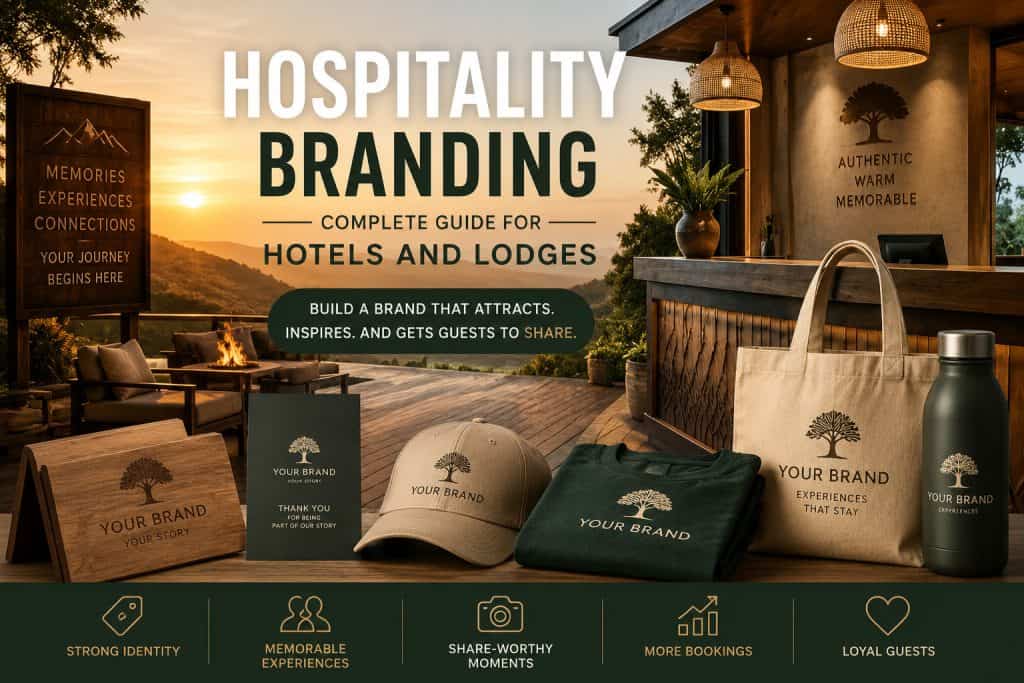
What Is Hospitality Branding?
Hospitality branding is the strategic process of shaping how your business is perceived across every touchpoint, from your website and marketing campaigns to your physical environment and guest interactions.
A strong brand answers:
- Who are your ideal guests?
- What experience do you offer?
- Why should someone book with you?
Ultimately, hospitality branding influences trust, pricing, and booking decisions.
Why Hospitality Branding Drives Revenue
Many hospitality businesses struggle with:
- low direct bookings
- heavy reliance on OTAs
- price-sensitive customers
These are often branding problems, not just marketing issues.
A strong brand helps you:
- charge premium prices
- attract better clients
- convert more website visitors
When combined with a high-converting tourism website design service, branding becomes a powerful revenue engine rather than just a visual upgrade.
Core Elements of Hospitality Branding
1. Brand Positioning
Positioning defines how your business is perceived.
Are you:
- budget-friendly?
- mid-range?
- luxury experience?
Clear positioning ensures you attract the right audience.
2. Visual Identity
Your visual identity includes:
- logo
- colors
- typography
- photography style
Consistency across platforms builds trust and recognition.
3. Website & Booking Experience
Your website is your most important branding asset.
It must:
- communicate your experience clearly
- showcase your property visually
- guide users toward booking
Many operators improve performance by investing in professional hotel website design for direct bookings to ensure their branding converts traffic into revenue.
4. Guest Experience Branding
Branding continues after a guest arrives.
It includes:
- welcome experience
- room presentation
- staff interaction
- small details
This is where physical branding becomes a powerful differentiator.
The Role of Physical Branding in Hospitality
One of the most overlooked aspects of hospitality branding is how your brand exists in the physical space.
Guests don’t just remember what they see online; they remember what they interact with during their stay.
Strong physical branding ensures your identity is visible, consistent, and memorable across your entire property.
Branded Products That Elevate Hospitality Experiences
To build a premium and consistent brand, hospitality businesses should integrate branded materials across multiple touchpoints.
1. Interior & Office Branding
These define the visual identity of your space:
- wood printing (decor panels, wall art, carved signage)
- reception branding
- office branding elements
- directional signage and information boards
These elements create a cohesive, professional look that reinforces your brand at every step.
2. Apparel & Staff Presentation
Your team is part of your brand.
Branded apparel helps communicate professionalism and consistency:
- cap printing
- t-shirt printing
- sweater and hoodie printing
These can be used for:
- staff uniforms
- tour guides and drivers
- promotional merchandise
3. Vehicle Branding
For safari operators and hotels offering transfers, vehicles are mobile billboards.
- car branding
- safari vehicle graphics
- transport vehicle wraps
This increases visibility and strengthens brand recognition beyond your property.
4. Guest-Facing Branded Items
Small branded items significantly improve guest perception:
- custom printed materials
- branded accessories
- welcome items
- informational materials
These details elevate the overall experience and make your brand feel more premium.
Creating Instagram Worthy Branded Spaces (UGC Strategy 🔥)
One of the most powerful modern branding strategies is designing spaces specifically for guest photos and user-generated content (UGC).
Platforms like Instagram have made visual sharing a core part of travel experiences.
Why UGC Matters
When guests take and share photos:
- your brand reaches new audiences organically
- you gain free, high-quality marketing
- trust increases through real experiences
This is one of the most cost-effective marketing channels available today.
How to Design Photo Friendly Branded Areas
1. Scenic Signature Spots
Create areas where guests naturally want to take photos:
- sunset viewpoints
- infinity pool edges
- outdoor lounges
Enhance them with subtle branding:
- engraved wood signage
- branded structures
- decorative brand elements
2. Branded Installations
Design dedicated brand moments:
- logo walls
- artistic installations
- statement signage
These become recognizable identity points for your business.
3. Group Photo Areas
Design spaces for:
- couples
- families
- tour groups
Include:
- seating layouts
- balanced backdrops
- clear viewing angles
These increase the likelihood of group photos being taken and shared.
4. Experience Based Branding
Some of the best photos happen during experiences:
- bush dinners
- picnic setups
- guided excursions
Add branding through:
- printed materials
- setup styling
- subtle visual identity elements
The Goal
Make it effortless for guests to:
- take photos
- share experiences
- tag your business
This turns your guests into brand ambassadors.
Common Hospitality Branding Mistakes
Avoid these:
1. Ignoring Physical Branding
Many businesses focus only on digital presence.
2. Weak Guest Experience
Branding must extend beyond visuals.
3. No Clear Positioning
Trying to target everyone reduces effectiveness.
4. No Conversion Strategy
Branding must work together with performance-driven tourism marketing services to generate results.
How to Build a Complete Hospitality Branding System
Step 1: Define Your Target Audience
Luxury travelers, honeymoon couples, or adventure tourists.
Step 2: Align Your Visual Identity
Ensure consistency across all platforms.
Step 3: Optimize Your Website
Your website should clearly communicate your value and drive bookings.
Step 4: Implement Physical Branding
Use:
- wood prints
- apparel
- signage
- vehicle branding
Step 5: Create Photo-Worthy Experiences
Design your property for shareable moments.
Step 6: Drive Traffic with Marketing
Use Google Ads for travel businesses to attract high-intent visitors.
Hospitality Branding for Safari Lodges
Safari businesses operate in a highly visual and experience-driven market.
To stand out:
- invest in storytelling
- create a premium visual identity
- design memorable guest experiences
Combining branding with tourism SEO services for safari companies ensures long-term growth and visibility.
Final Thoughts
Hospitality branding is not just about how your business looks; it is about how it performs.
By combining:
- strong positioning
- consistent visual identity
- physical branding assets
- guest experience design
- user-generated content strategies
you can create a brand that attracts high-value guests and drives more direct bookings.
Ready to Elevate Your Hospitality Brand?
If you want to transform your hotel or lodge into a premium brand that stands out and converts more guests, a strategic approach to hospitality branding can unlock significant growth.
Add your first comment to this post