
In the competitive world of digital marketing, Facebook Dynamic Ads for Travel have become one of the most powerful tools for hospitality brands looking to increase bookings and maximize return on ad spend (ROAS). As travelers increasingly rely on online research before making booking decisions, reaching them with personalized, data-driven ads is no longer optional it’s essential.
Facebook Dynamic Ads for Travel allow hotels, resorts, airlines, and travel agencies to automatically show the most relevant properties or offers to users based on their behavior. This advanced level of personalization helps hospitality marketers capture high-intent audiences, reduce wasted ad spend, and significantly improve campaign performance.
In this article, we’ll explore how Facebook Dynamic Ads for Travel work, why they are critical for hospitality marketing, and how to optimize them for maximum ROAS.
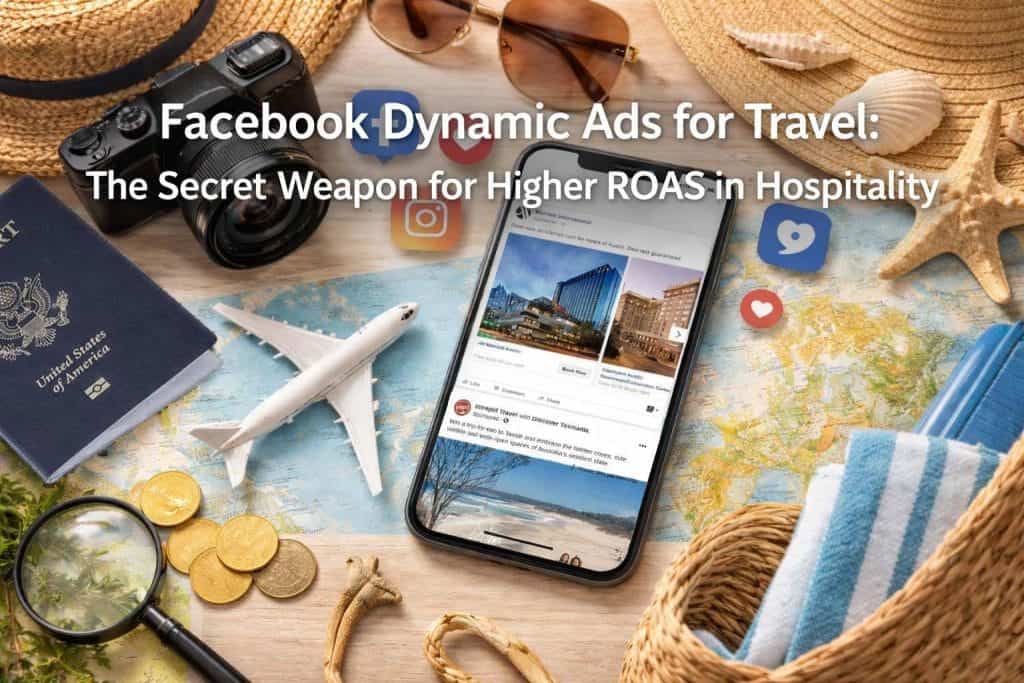
What Are Facebook Dynamic Ads for Travel?
Facebook Dynamic Ads for Travel are a specialized ad format designed specifically for the travel and hospitality industry. Unlike traditional ads that display the same message to every user, these ads dynamically generate personalized content based on user interactions.
For example, if a potential guest browses a hotel room on your website but doesn’t complete the booking, facebook ads for tourism can automatically retarget that user with the exact room—or similar options—on Facebook or Instagram.
These ads rely on three key components:
- A travel catalog containing your properties, pricing, and availability
- The Facebook Pixel or Conversions API to track user behavior
- Dynamic ad templates that automatically populate with relevant data
This combination allows advertisers to deliver highly relevant ads at scale without manual effort.
Why Facebook Dynamic Ads for Travel Are Essential for Hospitality
The hospitality industry has a long and complex customer journey. Travelers often compare multiple options, revisit websites, and take time before making a final decision. This is where Facebook Dynamic Ads for Travel provide a major advantage.
Capture High-Intent Travelers
One of the biggest benefits of Facebook Dynamic Ads for Travel is the ability to target users who have already shown interest. These users are far more likely to convert than cold audiences.
Instead of broad targeting, you focus your budget on people who have:
- Viewed specific hotel listings
- Searched for destinations
- Initiated a booking
Deliver Personalization at Scale
Personalization is critical in modern marketing, and Facebook Dynamic Ads for Travel excel in this area. Each user sees ads tailored to their preferences, behavior, and search history.
For example:
- A user searching for beach resorts sees coastal properties
- A business traveler sees city hotels
- A luxury traveler sees premium suites
This level of relevance drives higher engagement and conversion rates.
Show Real-Time Pricing and Availability
Travel pricing changes frequently. Facebook Dynamic Ads for Travel automatically update pricing and availability based on your catalog feed, ensuring users always see accurate information.
This reduces friction and increases trust two key factors in driving bookings.
Scale Campaigns Efficiently
Instead of manually creating hundreds of ads, Facebook Dynamic Ads for Travel allow marketers to use templates that automatically adapt to different users and inventory.
This saves time while enabling large-scale campaigns across multiple destinations and properties.
How Facebook Dynamic Ads for Travel Improve ROAS
If your goal is to increase profitability, Facebook Dynamic Ads for Travel directly impact ROAS in several ways.
Higher Conversion Rates
Because ads are highly relevant, users are more likely to click and complete bookings. Showing users exactly what they previously viewed significantly increases conversion probability.
Lower Cost Per Acquisition
With better targeting and personalization, Facebook Dynamic Ads for Travel reduce wasted impressions and clicks. This leads to lower cost per acquisition (CPA) and more efficient spending.
Smarter Retargeting
Traditional retargeting often shows generic ads. Facebook Dynamic Ads for Travel take this further by displaying specific properties or offers, making retargeting much more effective.
Automated Optimization
Facebook’s algorithm uses performance data to optimize delivery. With Facebook Dynamic Ads for Travel, the system has richer data to work with, resulting in better audience targeting and budget allocation.
Key Use Cases for Facebook Dynamic Ads for Travel
There are several high-impact ways to use Facebook Dynamic Ads for Travel in hospitality marketing.
Website Retargeting
Re-engage users who visited your website but didn’t book by showing them the exact properties they viewed.
Abandoned Booking Recovery
Target users who started the booking process but didn’t complete it. These users are highly valuable and often just need a reminder.
Cross-Selling and Upselling
Promote upgrades, packages, or add-ons such as spa services, breakfast deals, or premium rooms.
Destination-Based Targeting
Show users properties in destinations they’ve searched for, even if they didn’t visit a specific hotel page.
How to Set Up Facebook Dynamic Ads for Travel
To fully leverage Facebook Dynamic Ads for Travel, follow these essential steps:
1. Build a High-Quality Travel Catalog
Your catalog should include:
- Property names
- Images
- Pricing
- Availability
- Location data
Accurate and complete data is critical for performance.
2. Implement Tracking
Install the Facebook Pixel or Conversions API to track user behavior such as:
- Page views
- Searches
- Booking initiation
- Purchases
3. Create Audience Segments
Segment users based on their behavior to improve targeting:
- Browsers
- Searchers
- Abandoners
- Repeat visitors
4. Design Dynamic Ad Templates
Create flexible templates that include:
- High-quality images
- Clear calls-to-action
- Pricing information
5. Launch and Optimize
Once your campaigns are live, continuously monitor and optimize performance by adjusting:
- Audience segments
- Budget allocation
- Creative elements
Best Practices for Facebook Dynamic Ads for Travel
To maximize results, follow these proven strategies:
Use High-Quality Images
Visuals are crucial in travel marketing. Invest in professional photography to showcase your properties.
Add Urgency
Encourage faster bookings with messages like:
- “Limited availability”
- “Only a few rooms left”
- “Book now for the best price”
Optimize for Mobile
Most travel searches happen on mobile devices. Ensure your ads and landing pages are mobile-friendly.
Segment Audiences Strategically
Different users require different messaging. Tailor your campaigns based on user intent and behavior.
Test and Iterate
Continuously test different formats, creatives, and audiences to find what works best.
Common Mistakes to Avoid
Even with the power of Facebook Dynamic Ads for Travel, mistakes can limit performance.
- Using incomplete or outdated catalogs
- Poor tracking implementation
- Overlapping audience targeting
- Low-quality creatives
Avoiding these issues ensures your campaigns perform at their full potential.
The Future of Facebook Dynamic Ads for Travel
As privacy changes reshape digital advertising, first-party data is becoming more important than ever. Facebook Dynamic Ads for Travel rely on this data, making them a future-proof solution for hospitality marketers.
With advancements in AI and automation, these ads will continue to improve, offering even more precise targeting and personalization.
Conclusion
Facebook Dynamic Ads for Travel are a game-changing solution for hospitality brands looking to increase bookings and maximize ROAS. By combining automation, personalization, and real-time data, these ads enable marketers to deliver highly relevant experiences to potential travelers.
In an industry where timing and relevance are everything, adopting Facebook Dynamic Ads for Travel is no longer optional it’s a strategic necessity. Brands that leverage this powerful tool effectively will gain a competitive edge, drive higher conversions, and achieve sustainable growth in an increasingly crowded market.
Add your first comment to this post