
A strong B2B email marketing strategy remains one of the highest-ROI channels for generating leads, nurturing prospects, and closing deals. While social and paid channels fluctuate, email consistently delivers predictable results, especially when paired with automation, personalization, and a data-driven framework. If you need professional help implementing these strategies, you can partner with a specialized provider, such as a trusted B2B Email Marketing Services company.
Why B2B Email Marketing Still Works
Unlike B2C, where buying decisions can be instant or emotional, B2B buyers follow a longer, multi-stakeholder journey. Email allows you to deliver the right message at each touchpoint, awareness, evaluation, consideration, and purchase.
Key strengths of B2B email:
- Direct, permission-based communication
- High ROI
- Scalable personalization using CRM and automation tools like HubSpot or Mailchimp
- Ability to nurture complex buying committees
- Data-rich tracking for optimizing campaigns
Step-By-Step B2B Email Marketing Strategy Framework
1. Define Your B2B Email Objectives
Every high-performing campaign starts with clear goals. B2B email objectives typically include:
- Lead generation
- Lead nurturing
- Product education
- Sales enablement
- Customer onboarding
- Retention and renewals
Use SMART criteria to define KPIs such as open rates, click-through rates, demo requests, pipeline created, and revenue influenced.
2. Map the B2B Buyer Journey
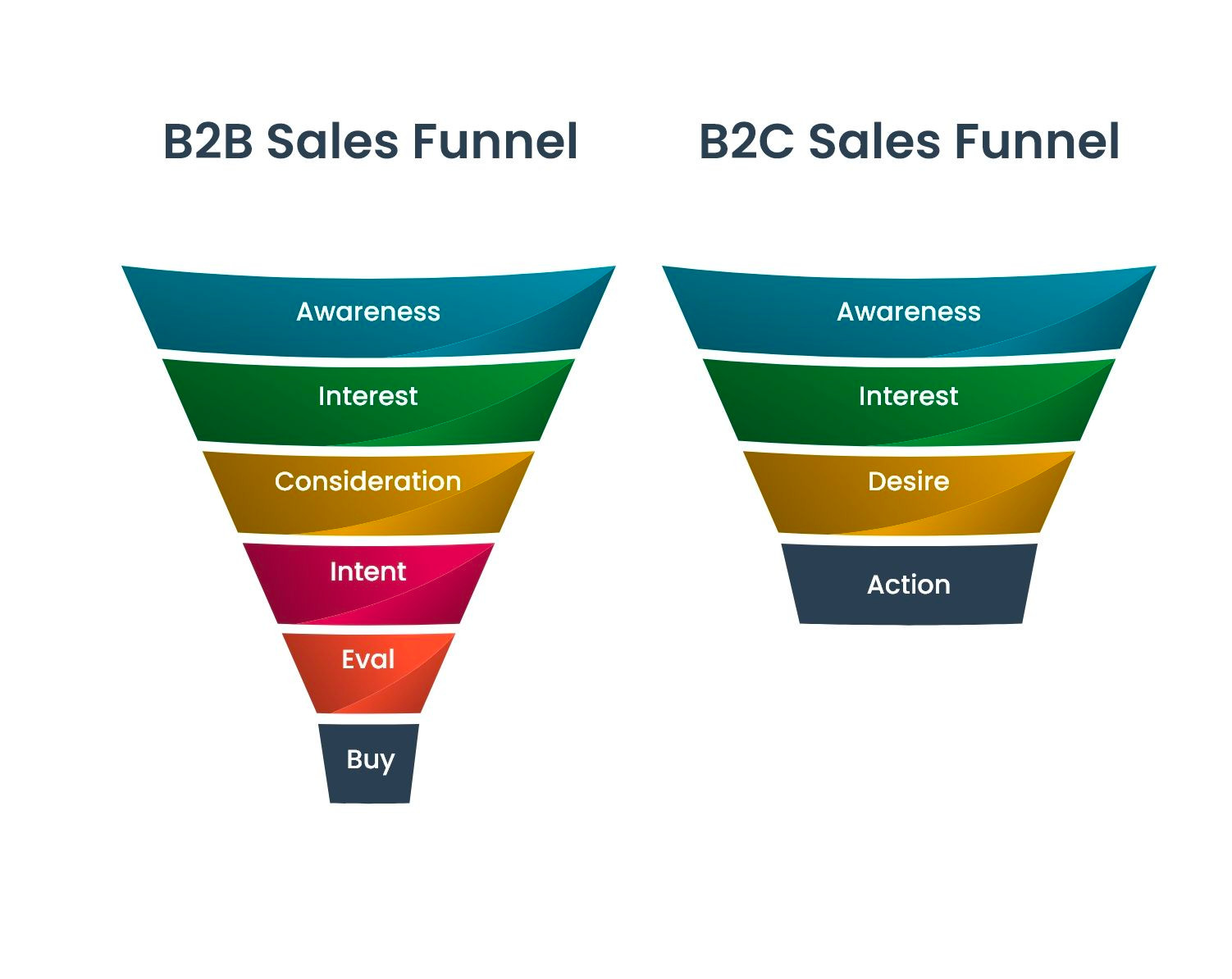
Understanding how prospects progress from stranger to customer helps you deliver emails that feel relevant at each decision stage.
B2B buyer journey stages
- Awareness — Prospect identifies a problem
- Consideration — Researching potential solutions
- Decision — Comparing vendors
- Purchase — Becoming a customer
- Retention — Maximizing value after onboarding
Email goals per stage
- Awareness: Share educational guides
- Consideration: Send case studies and webinars
- Decision: Provide demos, ROI tools
- Purchase: Offer onboarding content
- Retention: Share product updates and insights
3. Build High-Quality Segmented Lists
Segmentation is critical for conversions and personalization.
Segment by:
- Industry
- Company size
- Seniority
- Buyer role
- Lead score
- Behavior (page visits, downloads)
CRM systems like Salesforce help maintain dynamic segmentation.
Segmentation leads to higher open rates, better engagement, and lower unsubscribe rates.
4. Craft Your Core Email Messaging Framework
Great B2B emails are clear, targeted, and value-driven.
Essential elements
- Strong subject line
- Personalized preview text
- Value-focused message
- Social proof
- Clear CTA
- Clean design
Personalization Ideas
- Industry-specific recommendations
- Trigger-based content
- Relevant case studies
- Dynamic CTAs based on behaviour
5. Create B2B Email Sequences
A complete B2B email marketing strategy requires automated sequences that work together.
a. Lead Nurture Emails
- Pain-point guide
- Webinar invite
- Case study
- Product education
- Soft CTA to book a call
b. Sales Enablement Emails
- Product benefits
- ROI calculators
- Comparison sheets
- Demo invitation
- Objection handling
c. Onboarding Emails
- Welcome message
- Setup instructions
- Tutorials
- Adoption tips
- Check-in follow-up
d. Retention & Upsell Emails
- Feature updates
- Usage insights
- Cross-sell messages
- Renewal reminders
6. Build Automated Email Workflows
Automation ensures your emails reach the right prospects at the right time without manual effort.
Effective triggers
- Whitepaper download
- Webinar attendance
- Pricing page visit
- Demo request
- Period of inactivity
- Completed onboarding
Tools to use
- HubSpot
- Mailchimp
- Salesforce
If you prefer outsourcing instead of managing tools internally, you can work with a full-stack Digital Marketing Agency experienced in building end-to-end automation systems.
7. Optimize Your Emails for Deliverability
Your campaign only works if emails reach inboxes.
Deliverability Checklist
- Set up SPF, DKIM & DMARC
- Warm up sending domains gradually
- Remove inactive subscribers
- Avoid spam-trigger words
- Maintain a text-to-image balance
- Encourage subscribers to whitelist your domain
8. Measure Performance & Iterate
Data-driven refinement is key to long-term results.
Track metrics like:
- Open rate
- Click-through rate
- Conversion rate
- Bounce rate
- Unsubscribe rate
- Pipeline created
- Revenue influenced
Test elements such as:
- Subject lines
- CTAs
- Email frequency
- Copy length
- Design layout
- Personalization style
9. Integrate Email With Other Channels
Email performs best when combined with complementary B2B channels.
Integrate email with:
- LinkedIn ads
- Blog + SEO content
- Sales CRM outreach
- Webinars and events
- Account-Based Marketing (ABM)
- Retargeting systems
10. Build a B2B Email Content Calendar
Plan your next 90 days to ensure consistency.
Your calendar should include:
- Monthly newsletters
- Nurture sequences
- Sales enablement workflows
- Product updates
- Customer success messages
11. Follow B2B Email Compliance Requirements
Stay compliant with global regulations like:
- CAN-SPAM
- GDPR
- CASL
Checklist
- Add an unsubscribe link
- Include a business address
- Obtain explicit consent
- Respect data privacy laws
Conclusion: Build a B2B Email Marketing Strategy That Converts
A successful b2b email marketing strategy is built on segmentation, automation, personalized messaging, and continuous optimization. When implemented well, email becomes a reliable engine for nurturing leads, enabling sales teams, and generating predictable revenue.
If you want hands-on support building and deploying high-conversion email campaigns, you can collaborate with an experienced B2B Email Marketing Services provider or work with a full-service Digital Marketing Agency that manages strategy, execution, and analytics.
Add your first comment to this post