
In today’s digital-first travel market, your website is no longer just an online brochure; it’s your best salesperson. A well-executed Tour and Travels Website Design can mean the difference between a visitor dreaming about an adventure and actually booking it. Travelers want inspiration, trust, clarity, and simplicity all delivered within seconds.
This guide breaks down exactly how to design a high-converting tour and travel website that doesn’t just look good, but sells adventures consistently.
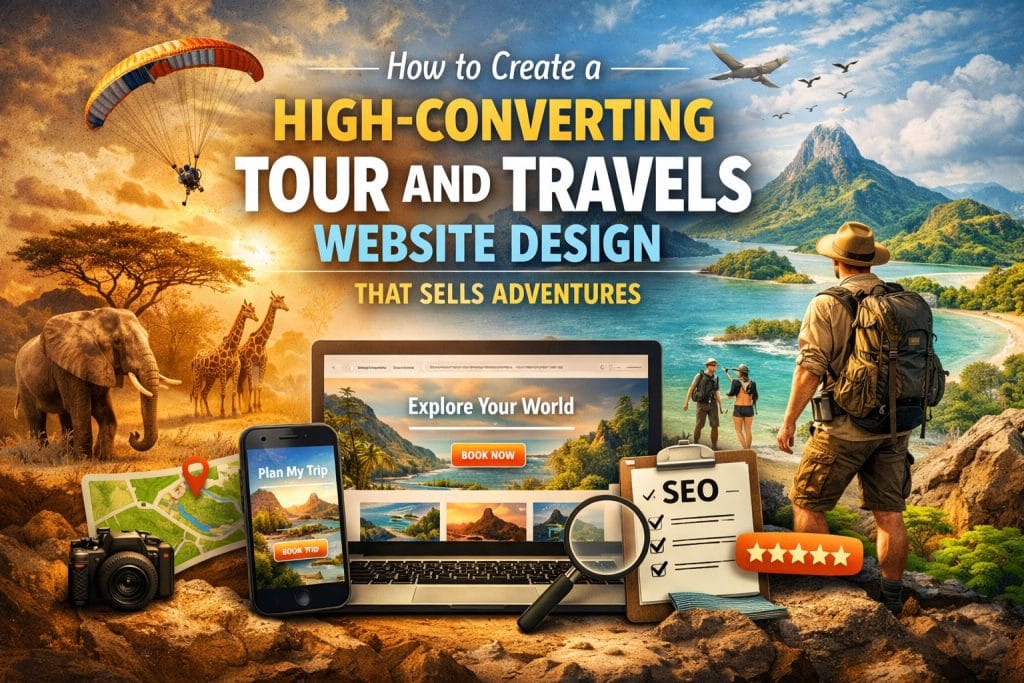
1. Start With a Clear Value Proposition Above the Fold
The first 5 seconds matter. When a visitor lands on your site, they should instantly understand:
- What experiences you offer
- Where you operate
- Why they should choose you
Your hero section should include:
- A powerful headline (e.g. “Authentic African Safaris Designed by Local Experts”)
- A short supporting subheading
- One primary call-to-action (CTA) like “View Tours” or “Plan My Trip”
Avoid clutter. Minimal text + emotional imagery = higher engagement.
2. Use Visual Storytelling to Sell the Experience
Travel is emotional. Your Tour and Travels Website Design must visually transport users before they ever book.
Best practices:
- High-quality, real photos (not overused stock images)
- Short background videos showing real experiences
- Images of guests, guides, wildlife, landscapes, or cultural moments
People don’t buy itineraries: they buy memories and feelings. Show them what their future looks like with you.
3. Design With Conversion-Focused User Experience (UX)
A beautiful website that’s hard to use will not convert. Your design must be intuitive, fast, and frictionless.
Key UX elements:
- Simple navigation (Tours, Destinations, About, Contact)
- Clear buttons with action-driven text
- Sticky CTAs on long pages
- Logical content flow from inspiration → trust → action
Every page should answer one question:
“What do you want the visitor to do next?”
4. Optimize Tour Pages for Bookings, Not Just Information
Your tour pages are your money pages. A high-converting tour page should include:
- Clear tour title and duration
- Highlights and unique selling points
- What’s included/excluded
- Sample itinerary
- Real photos from that exact tour
- Social proof (reviews, testimonials, badges)
- Strong CTA (Send Inquiry, WhatsApp, Book Now)
Avoid long text blocks. Use bullet points, icons, and scannable sections to keep users engaged.
5. Build Trust With Social Proof and Credibility Signals
Travelers are cautious, especially for international trips. Trust is non-negotiable in Tour and Travels Website Design.
Add credibility with:
- Google Reviews or TripAdvisor widgets
- Testimonials with names and photos
- Certifications, memberships, or awards
- “About Us” page with real faces and stories
- Clear contact information and WhatsApp buttons
If users trust you, price becomes less of an obstacle.
6. Make Your Website Mobile-First (Not Just Mobile-Friendly)
Over 70% of travel website traffic comes from mobile devices. A mobile-first design is essential.
Mobile optimization tips:
- Fast-loading pages
- Large readable text
- Thumb-friendly buttons
- Click-to-call and click-to-WhatsApp features
- Short forms (name, email, message: nothing more)
If your mobile experience is poor, you’re losing bookings daily.
7. Speed and Performance Matter More Than You Think
A slow website kills conversions and SEO rankings.
To improve speed:
- Compress images
- Use modern formats (WebP)
- Enable caching
- Choose reliable hosting
- Minimize heavy scripts
Google favors fast websites and so do users. Every second of delay reduces conversions.
8. Design With SEO in Mind From Day One
The best travel agency websites must work hand-in-hand with an expert tourism SEO company to maximize visibility, attract high-intent travelers, and convert traffic into bookings.
SEO-friendly design includes:
- Clean URL structures
- Proper heading hierarchy (H1, H2, H3)
- Optimized images with alt text
- Internal linking between tours and blog posts
- Fast loading and mobile usability
Design and SEO are not separate; they must work together to drive organic traffic and conversions.
9. Use Clear, Persuasive Copywriting Throughout the Site
Design attracts attention, but copy closes the sale.
Effective travel copy:
- Focuses on benefits, not features
- Answers traveler objections
- Uses emotional language
- Speaks directly to the reader (“you”)
- Encourages action without pressure
Every button, headline, and section should guide users closer to contacting you or booking.
10. Track, Test, and Improve Continuously
A high-converting website is never “finished.”
Use tools like:
- Google Analytics
- Google Tag Manager
- Heatmaps (Hotjar, Microsoft Clarity)
Track:
- Button clicks
- Form submissions
- Drop-off points
- Page engagement
Then optimize layouts, CTAs, and content based on real user behavior.
Final Thoughts
A successful Tour and Travels Website Design blends emotion, trust, usability, and high performance into one seamless experience. When executed well, your site becomes a 24/7 sales engine, attracting the right travelers, building credibility, and turning casual visitors into confirmed bookings.
If your website isn’t selling adventures yet, it’s not a traffic issue; it’s a design and conversion issue.
And that’s exactly where the right travel website development company can make all the difference.
Fix the design, elevate the experience, and the sales will follow.
Add your first comment to this post